

Walk through a forest, a garden, or even a local park, and chances are you'll pass a variety of plants without giving them a second thought.
I think most of us do.
Throughout history, some of the most remarkable discoveries have come from things that were right in front of us all along.
I hadn't really thought about it much before, but now I do. I've been reading and learning about botanical science and fermentation technology that's currently taking place with some traditional Thai plants
Keep reading and I think you'll understand my recent interest.
It does raise an interesting question:
How can something be both extensively studied and largely unknown at the same time?
The answer may reveal something fascinating about the way science and public awareness often work.
Not Everything Valuable Is Widely Known
When people think about scientific breakthroughs, they usually imagine brand-new discoveries. Maybe something that emerges from a high-tech laboratory or something found in a super remote part of the world. Or maybe even something from the sea, or space.
But as it turns out, a lot of eye-opening innovations actually begin with something much older.
A plant ... a traditional practice ... or an overlooked idea.
In many cases, researchers spend years—or even decades—studying a natural compound before the broader public becomes aware of it.
That's an intriguing thought.
The gap between scientific interest and public awareness can be surprisingly large.
Just because something is being studied doesn't mean it's making headlines.
But just because something isn't making headlines doesn't mean it isn't important.
The Hidden World of Botanical Research
Around the world, universities, laboratories, and research institutions are studying plants for their natrual superpowers.
Many of these plants have been part of traditional cultures for generations, and scientists are looking closely at key things to unlock the secrets of these forgotten plants.
They will often examine the following:
- Nature's active ingredients
- Cell-protecting power
- The massive variety of plant life
- Time-tested remedies
- How it works inside the body
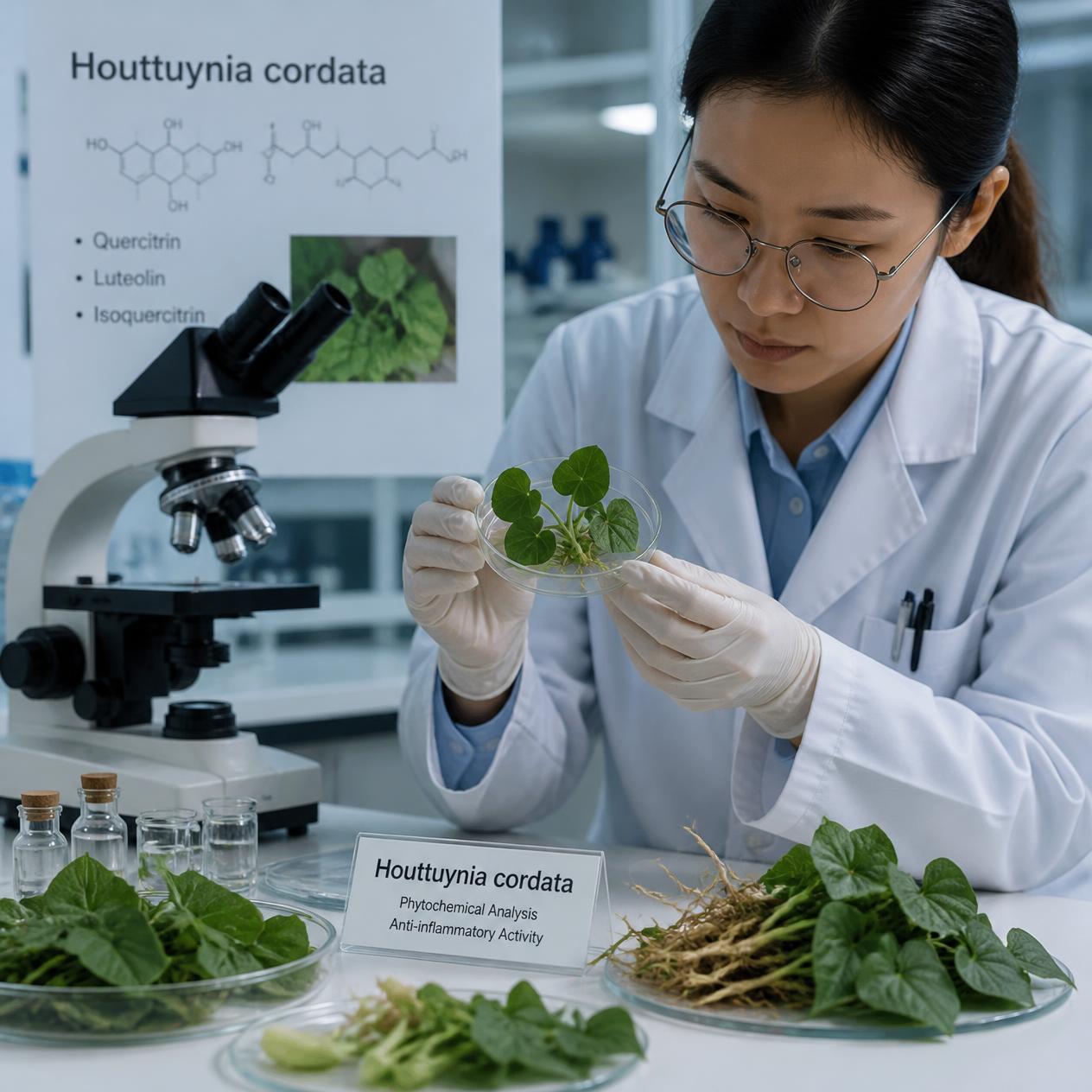
 A scientist examining botanical samples
Yet most consumers never hear about these studies.
Scientific literature and public awareness are not always on the same page.
That's why some of nature's most researched plants remain relatively unknown among non-specialized people.
Meet Houttuynia Cordata: A Plant Hidden in Plain Sight
One fascinating example is Houttuynia cordata, a botanical native to parts of Asia that has been used traditionally for generations.
Known by various names throughout the region, including Plu Kaow in Thailand and Fish Mint in some other countries, this unique plant has attracted significant scientific attention over the years.
Dokudami is another name that will reference with Houttuynia.
What surprises many people, including myself, is that despite extensive research and interest among these intellectuals, most North Americans have never heard of it.
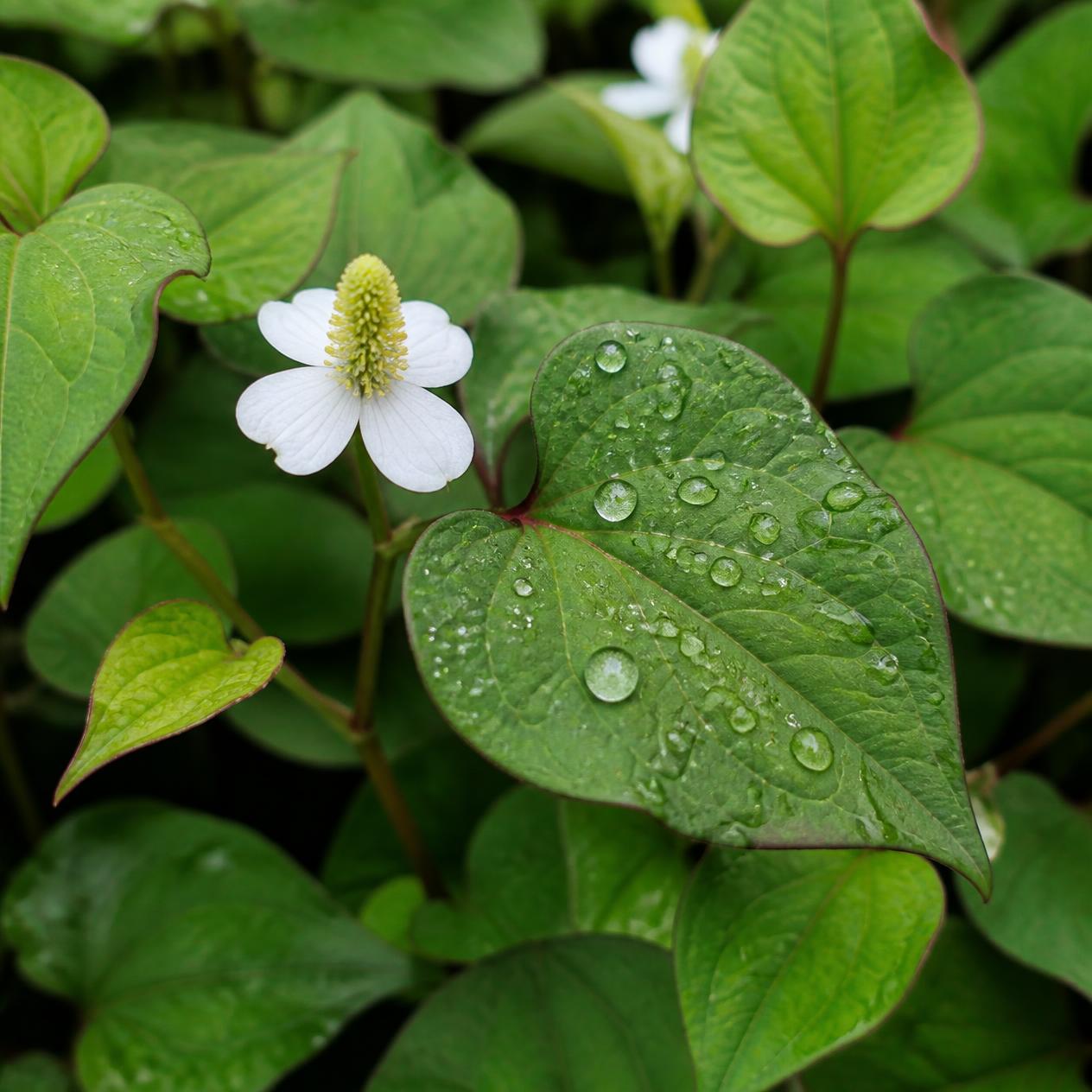
 A beautiful Houttuynia plant close-up
Still, these researchers continue to explore its naturally occurring compounds and unique characteristics.
In many ways, Houttuynia cordata represents the perfect example of something hidden in plain sight—a plant with a long history, tons of scientific literature, and relatively little public recognition.
Why Do Some Plants Like Plu Kaow Stay Under the Radar?
There are several reasons why certain plants and botanicals remain unknown.
Research Takes Time
Yes it's true it does take time to sort it and get the answers. Scientific understanding develops gradually.
Researchers can spend years with their observations and validating the results. Performing studies, and exploring new questions is not something that happens overnight. That info may not reach the mainstream audiences for a good long while.
Geography Matters
Some plants are deeply familiar in one part of the world but virtually unknown in another.
A plant commonly recognized throughout Southeast Asia may be completely unfamiliar to consumers in North America.
Fish Mint and Dokudami are two more examples that come to mind.
Innovation Often Happens Quietly
Many of the most important developments don't begin with large advertising campaigns.
They begin with curiosity, experimentation, and years of dedicated work behind the scenes.
Public awareness usually arrives much later.
The Best of Both Worlds: Where Tradition Meets Science
One of the most exciting shifts in modern wellness is how we are bringing ancient plant wisdom and modern science together. Instead of trying to replace nature with chemicals, researchers are looking for ways to fully unlock its power.
Scientists are doing this by focusing on four major areas:
- Smarter ways to harvest: Using clean, advanced methods to pull out the active ingredients from a plant without damaging them.
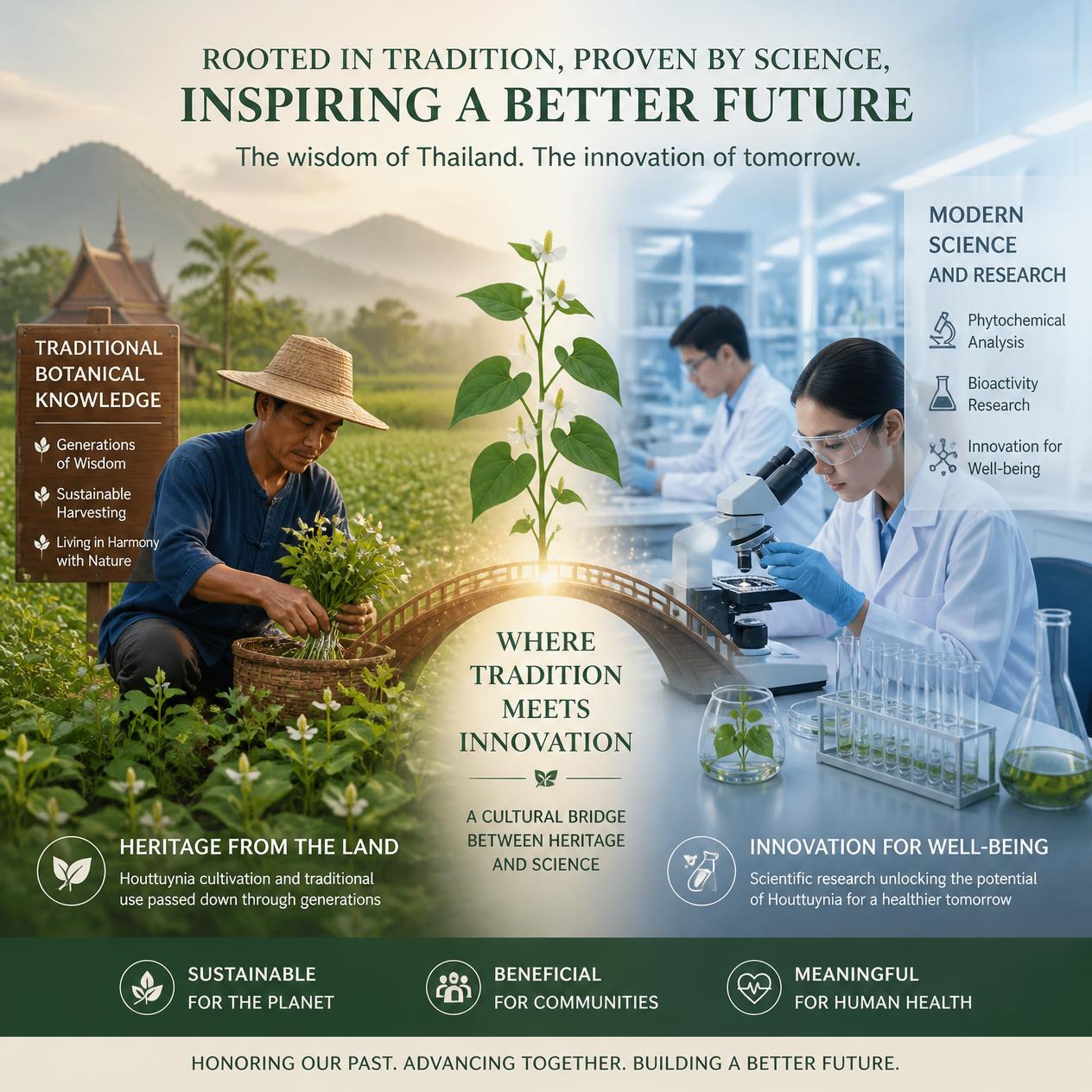
 Thailand Tradition To Modern Science
- Better delivery systems: Creating new ways to wrap up these plant nutrients so they actually survive the trip through your stomach.
- The power of fermentation: Using natural microbes to break down plants, which often makes them stronger and easier to digest.
- Boosting absorption: Studying exactly how to help your bloodstream absorb more of the good stuff, so nothing goes to waste.
The goal behind all of this is simple: They want to learn how to make nature’s hidden talents work even better for your everyday health
The Growing Interest in Fermented Botanicals
As nutritional science evolves, fermentation has become one of the most talked-about areas of botanical innovation.
Researchers are studying how fermentation processes may help transform plant materials into forms that are more accessible and usable.
Instead of focusing solely on discovering new ingredients, scientists are increasingly asking a different question:
How can we improve the way beneficial compounds are delivered and utilized?
This shift is helping drive a new generation of plant-based wellness breakthroughs built around bioavailability, absorption, and efficiency.
Sometimes the Most Interesting Discoveries Aren't New
Perhaps the biggest lesson from plants like Houttuynia cordata is that advancements isn't always about finding something new.
Sometimes it's about looking more closely at something that's been there all along.
History is filled with examples of ideas, technologies, and discoveries that existed long before they became widely recognized.
The same can be true in the world of botanical science.
A plant may spend years quietly attracting research attention before most people ever hear its name.
Hidden in Plain Sight
The next major breakthrough isn't always hiding in a remote laboratory.
Sometimes it's growing in a field.
Sometimes it's rooted in generations of traditional knowledge.
Sometimes it's already being studied by researchers around the world while remaining virtually unknown to the average person.
That's what makes the story of Houttuynia cordata so fascinating.
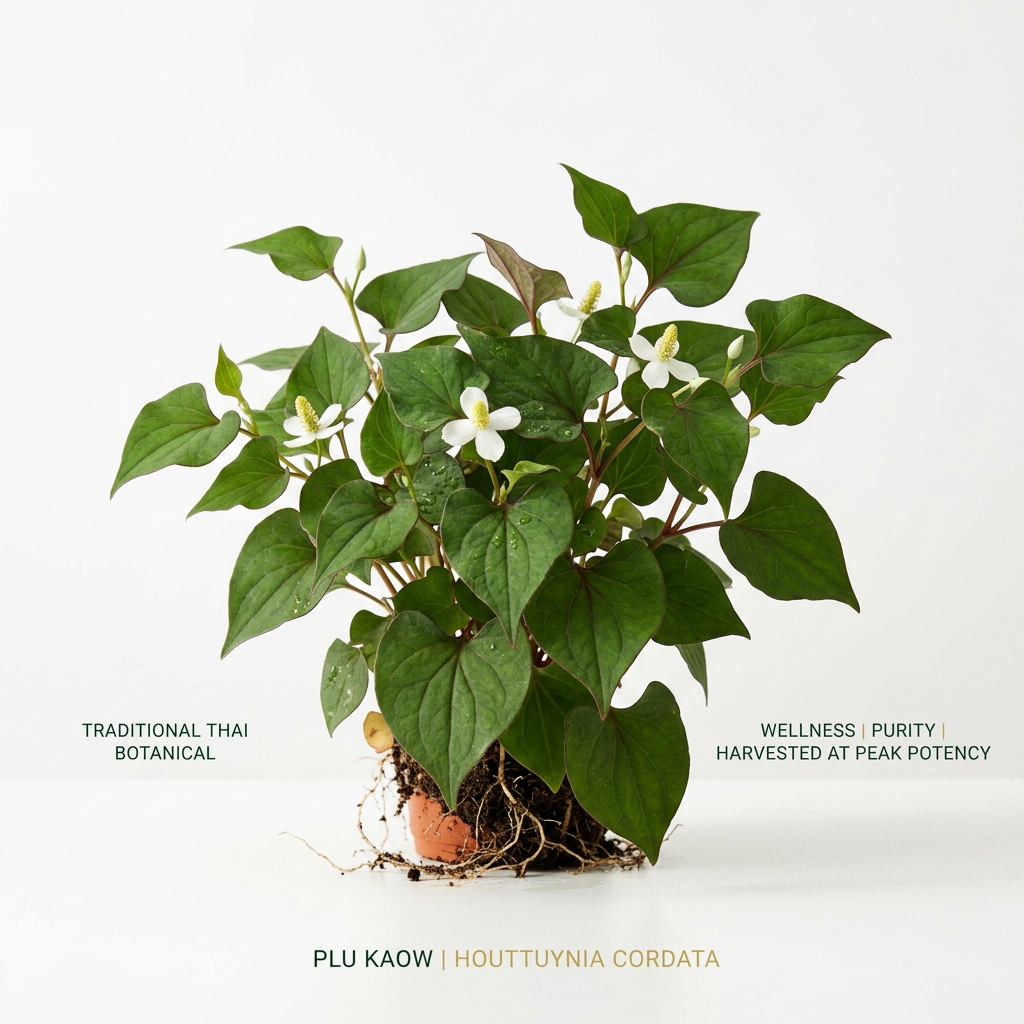
Plu Kaow Houttuynia pant
Not because it's new.
But because it reminds us that some of the most interesting discoveries are often hidden in plain sight.
And those willing to look a little closer are often the first to see what's coming next.

0 comments