
Dokudami PluriActiv
Science
Understanding the Research Behind the Botanical, Fermentation, and Formulation
* Dokudami PluriActiv is Illumera Life's exclusive version of Dr. Aswin Wattanapramote's Dokudami botanical formulation. Throughout this guide, we'll refer to it simply as PluriActiv for readability while explaining the ingredients, fermentation process, and formulation philosophy.
There's a reason Houttuynia cordata has attracted scientific interest for decades. Researchers have investigated the plant's natural compounds and a range of biological activities, with studies appearing across laboratory, animal, and human research."
But understanding the science behind PluriActiv requires an important distinction: research on Houttuynia cordata provides the scientific background for the botanical, while research specifically on the finished PluriActiv formulation is a separate question.
Why Is Houttuynia cordata Being Studied?
Houttuynia cordata is far from a modern trend or a synthetic creation invented for the supplement industry. It is a well-established botanical species with deep historical roots across East and Southeast Asia, where it has been used for centuries both in traditional herbal practice and as a culinary staple.
Known by common names such as chameleon plant, fish mint, plu kaow, or dokudami, it is appreciated in different cultures for its unique flavor profile and fresh leaf profile.
In recent decades, it has gained attention in the science community, which has gone to work to figure out on a detailed, step-by-step level, why these ancient traditional remedies actually work. Today, scientists from many different fields are studying it in several different ways:"

At A Glance
Today, experts from several different fields (like biology, chemistry, and medicine) are studying and testing it at different levels, including human trials.
~ Researchers have identified several key types of compounds in Houttuynia cordata, including flavonoids, phenolics, alkaloids, and volatile oils. These various extracts and compounds are currently being studied across a varying range of experimental models.
What's Actually Being Studied?
Houttuynia cordata contains many naturally occurring compounds, which work together to give the plant its unique properties. Researchers broadly categorize these key constituents into several main groups:
Flavonoids: A diverse group of plant pigments and antioxidants known for their role in plant defense and supporting overall cellular health.
Phenolic Compounds: Natural chemical compounds that act as strong antioxidants, helping to protect plant cells from oxidative stress and environmental damage.
Alkaloids: Nitrogen-rich plant compounds that often exhibit potent physiological effects and biological activities.
Volatile Oils: Aromatic essential oils responsible for the distinct scent and flavor profile of the plant, frequently studied for their unique chemical constituents.
Polysaccharides: Complex carbohydrates made of long chains of sugar molecules that help structure the plant and store energy.
Ongoing studies are still researching these ingredients and their properties to determine their benefits and effectiviness on the human body.

What Does the Houttuynia Research Suggest?
Antioxidant Activity
Research has investigated antioxidant-related activity in Houttuynia cordata and individual compounds.
Learn More ➝ (Coming Soon)
Inflammatory Pathways
Laboratory and animal studies have examined interactions with pathways associated with inflammation.
Learn More ➝ (Coming Soon)
Immune Activity
Researchers have investigated various immune-related effects.
Learn More ➝ (Coming Soon)
Antimicrobial Activity
Studies have examined antibacterial and antiviral activity of extracts and compounds.
Learn More ➝ (Coming Soon)
Metabolic Research
Some research has explored metabolic pathways and related biological effects.
Learn More ➝ (Coming Soon)
Other Areas
The literature also includes research into other biological systems and potential applications.
You can visit PubMed to review a vast assortment of studies

"Searching PubMed gives you direct access to decades of published studies, allowing you to explore the latest science at your own pace."
Why Fermentation Changes the Conversation
When most people hear "fermentation," they think of yogurt, sourdough, or kombucha. But in the world of botanical science, fermentation is far more than an ancient food technique—it’s a powerful natural method for altering plant material at a molecular level.
To understand why this matters for PluriActiv, it helps to look at what actually happens when a plant undergoes fermentation.
Raw Botanicals vs. Fermented Botanical Preparations
- Raw Botanicals: In their natural state, plant materials are complex. Their beneficial compounds are often trapped inside dense plant cells or locked within larger natural structures. While raw botanicals contain valuable nutrients, these tough cell walls can make it harder for your body to absorb and process them..
- Fermented Botanical Preparations: During fermentation, natural micro-organisms break down the plant material. This biological transformation can alter the chemical composition of the plant, breaking complex structures into smaller, simpler parts and modifying the concentration or mix of specific compounds.
The Science Behind PluriActiv’s Process
The purpose of the proprietary fermentation process used in PluriActiv is to deliberately transform the raw botanical material. By carefully controlling how our plant ingredients ferment, we help draw out their full potential beyond what raw nature provides.
We use a carefully controlled fermentation process. Much of our research focuses on studying how this transformation changes the plant's makeup and helps your body absorb its key nutrients.
As the research continues, we’ll use this section to keep you updated on everything we discover.

From Traditional Botanical to Modern Research
Research into Houttuynia cordata has explored a surprisingly broad range of biological activity. The areas below represent some of the major subjects researchers have investigated, from antioxidant and inflammatory pathways to antimicrobial, immune, and metabolic activity.
The Houyytunia Research Journey
Traditional Use
Botanical Identification
Phytochemical Research
Animal Studies
Modern Formulation
Laboratory Research
Human Research
This journey illustrates how a plant with a long history of traditional use can become the subject of increasingly sophisticated scientific investigation. Each stage adds another piece to the picture, helping researchers better understand Houttuynia cordata, its compounds, and the potential significance of its biological properties.
What Does "Research-Backed" Actually Mean?
In the supplement world, the phrase "research-backed" gets tossed around constantly. Too often, it's used as a buzzword to make big promises sound official.
At PluriActiv, we believe in total transparency. That means being honest about what science actually says—and what it doesn’t. To really understand the research, it helps to know that not all scientific studies carry the same weight.
Here is how science builds its evidence, from the ground up:
The Ladder of Scientific Evidence
Laboratory (In Vitro) Studies
What it is: Testing ingredients on cells or molecules in test tubes.
What it tells us: It shows interesting initial possibilities, but it is not proof of how something works in the human body.
Animal (In Vivo) Studies
What it is: Research conducted in living animal models.
What it tells us: It helps scientists understand basic biological processes, but animals aren't humans—so results don't automatically transfer.
Human Clinical Studies
What it is: Research conducted directly with real people in controlled settings.
What it tells us: This gives us much more direct, relevant insights into safety, absorption, and real-world effects.
Systematic Reviews
What it is: Studies that analyze and combine data from dozens of different trials.
What it tells us: It provides a bigger, more reliable picture by looking across the entire landscape of research rather than just a single study.
Real Science Over Marketing Hype
Here is the simple truth: the existence of research doesn't automatically mean that every proposed benefit has been proven.
A study showing that an ingredient does something interesting in a lab dish is a great starting point, but it isn't a final answer. We share the underlying research because we respect your intelligence, and we want you to see the exact foundation our science is built on—step by step.
What We Know — and What We Don't Yet Know
What Research Has Established
- Houttuynia cordata has been extensively studied.
- Researchers have identified numerous naturally occurring compounds.
- Multiple biological activities have been investigated.
- The plant has a long history of traditional use.
- Modern research continues to expand our understanding.
What Research Has Not Established
- Every laboratory finding translates directly to humans.
- Every Houttuynia preparation is identical.
- Research on the plant automatically proves the finished PluriActiv product.
- Individual results can be guaranteed.
The Science Behind Dokudami PluriActiv
By now, we've looked at Houttuynia cordata from several different angles—from its long history of traditional use to the growing body of scientific research surrounding the plant and its naturally occurring compounds.
But there is another important part of the story.
What happens when this botanical is carefully processed and formulated for modern use?
That's where PluriActiv comes in.
From Botanical to Formulation
PluriActiv begins with Houttuynia cordata—the botanical commonly known as Dokudami or Fish Mint. But the plant itself is only the starting point.
The next steps matter.

Through a proprietary fermentation process, the botanical undergoes a controlled biological transformation. Fermentation isn't simply a matter of adding the word "fermented" to a label. The process, conditions, and microorganisms involved can all influence what happens to the original plant material.
The result is a carefully prepared botanical ingredient designed for use in a modern formulation.
Controlled Formulation
The final step is bringing that prepared botanical into a controlled, consistent product formulation.
This is where the pieces come together:
Houttuynia cordata
The botanical foundation.
Proprietary fermentation
The specialized process used to transform the botanical.
Controlled formulation
The finished preparation designed for consistent use.
Together, these form PluriActiv.
What Makes PluriActiv Different?
PluriActiv isn't simply another product containing Houttuynia cordata.
It represents Illumera Life's exclusive version of the Dokudami botanical formulation, developed from the Dokudami botanical and its proprietary fermentation process.
That's an important distinction.
The story isn't just about discovering an interesting plant. It's about taking a botanical with a long history and a growing body of scientific interest and applying a proprietary process and controlled formulation to create something designed for today's consumer.
This is the foundation of Dokudami PluriActiv.
From here forward, we'll simply call it PluriActiv.
The Bigger Picture
The science behind PluriActiv isn't based on one ingredient, one study, or one moment in time. It's the combination of the botanical itself, the way it is processed, and the way the finished formulation is prepared.
Plant + Process + Formulation = PluriActiv
And that combination is what makes the PluriActiv story worth exploring.
Where the Science is Going
If there's one thing worth remembering about science, it's that it rarely stands still.
Researchers continue to study Houttuynia cordata, asking new questions and finding new ways to understand this interesting botanical. Some of the work focuses on individual compounds within the plant. Other research looks at how those compounds behave, how they can be extracted or prepared, and how different processing methods may affect the final material.
And fermentation is part of that conversation too.
Researchers are continuing to explore how fermentation changes botanical materials, what happens to their naturally occurring compounds during the process, and how those changes may affect how the body interacts with them.
What Researchers Are Still Exploring
There are several important pieces of the puzzle that scientists continue to investigate:
What compounds are present?
Researchers continue identifying and studying specific compounds found in Houttuynia cordata and trying to better understand what they may contribute to the plant's biological activity.
How do they work?
Finding a compound is only the beginning. Scientists also want to understand what happens when that compound interacts with biological systems and the mechanisms that may be involved.
How can the plant be prepared?
Different extraction and processing methods can produce different botanical preparations. Researchers continue exploring how these methods affect what ultimately ends up in the finished material.
What does fermentation change?
Fermentation can transform botanical materials in ways that aren't always obvious from the original plant. Understanding those changes—and their significance—is an ongoing area of research.
How available are the compounds?
It's not enough for a compound to be present. Researchers are also interested in what happens after it is consumed, including how the body absorbs and handles different compounds.
How can quality and consistency be maintained?
As botanical products become more sophisticated, researchers and manufacturers continue looking at ways to better control processing, composition, consistency, and quality from one preparation to the next.
And what does human research tell us?
Laboratory and preclinical research can provide important clues, but human research is an essential part of understanding how findings translate to people. Continued human investigation can help add another layer of evidence to the scientific picture.
The Science Is Still Being Written
Recent review literature continues to examine areas such as the polysaccharides found in Houttuynia cordata, different extraction approaches, and the relationships between a compound's structure and its biological activity.
That's important because it tells us something bigger than any single study:
We are still learning.
Science isn't a finished book with every answer already written.
It's an ongoing process of asking better questions, testing ideas, examining results, and building on what came before.
And that's one of the most interesting things about Houttuynia cordata.
The story didn't end with traditional use.
It didn't end when scientists began studying the plant.
And it certainly doesn't end with what we know today.
The research continues.
Frequently Asked Questions
Science naturally creates questions. And when a botanical has been studied from so many different angles, it's worth separating what researchers have actually investigated from what may still be unknown.
Here are some of the most common questions about Houttuynia cordata, the research surrounding it, and PluriActiv.
FAQ
Yes. Houttuynia cordata has been the subject of a substantial body of scientific research covering its naturally occurring compounds, biological activity, extraction methods, and potential applications.
Research has examined areas including antioxidant, inflammatory, antimicrobial, immune-related, and metabolic activity. Recent reviews continue to examine the plant and its individual components, showing that scientific interest in Houttuynia cordata is ongoing.
PluriActiv is a specific, proprietary formulation of Houttuynia cordata that includes a proprietary fermentation process and controlled formulation. Research on Houttuynia cordata provides scientific context for the botanical, but it should not automatically be described as research on the finished PluriActiv product.
That distinction is important. A study of the plant or one of its compounds is not necessarily a study of PluriActiv itself.
Researchers have identified a variety of naturally occurring compounds in Houttuynia cordata, including polysaccharides, flavonoids, phenolic acids, volatile oils, and other constituents.
Different parts of the plant and different methods of extracting and preparing it can produce different chemical profiles. This is one reason researchers continue studying both the compounds themselves and how they relate to biological activity.
Fermentation is a biological process that can transform the original plant material. During fermentation, microorganisms interact with components of the botanical and can change the composition and characteristics of the resulting material.
The important point is that fermentation is not simply a label. The microorganisms, conditions, time, and process all matter. For PluriActiv, fermentation is part of the proprietary process used to prepare the botanical for the finished formulation.
It can, depending on the botanical, the fermentation process, and the compounds involved—but that statement should not automatically be applied to every fermented product.
Fermentation can change the chemical form or characteristics of compounds, which may affect how they are absorbed or utilized. Determining whether a particular formulation has improved bioavailability requires appropriate testing of that specific formulation.
Research on Houttuynia cordata and its constituents should not be confused with clinical research conducted specifically on PluriActiv.
The broader scientific literature provides important background on the botanical, but evidence from studies of the plant, individual compounds, or other preparations does not automatically establish clinical evidence for PluriActiv. As research continues, studies specifically involving the finished formulation can provide more direct evidence.
No—and this is an important distinction.
A study may investigate the whole plant, a particular extract, a specific compound, or a particular preparation of Houttuynia cordata. The results can help us understand the botanical, but they don't necessarily tell us exactly how the finished PluriActiv formulation behaves.
That's why we distinguish between research on the botanical and research specifically on the product.
There isn't one permanent number.
The scientific literature is continually growing, and the answer also depends on how the search is defined—for example, whether you're counting studies on the whole plant, specific compounds, extracts, polysaccharides, or particular biological activities.
Rather than focusing on one number that will eventually become outdated, it's more useful to recognize that Houttuynia cordata has been investigated across a broad range of scientific topics, with recent review articles continuing to organize and evaluate that research.
Laboratory research allows scientists to study specific biological effects under controlled conditions. This can include experiments using cells, isolated compounds, or other laboratory models.
Human research is different. It examines what happens in actual people and can provide evidence that laboratory findings do—or do not—translate to humans.
Both types of research are valuable, but they answer different questions. A promising laboratory finding is a reason for further investigation, not automatically proof of a human health benefit.
Dokudami PluriActiv is based on the Dokudami botanical and its proprietary fermentation process developed by Dr. Aswin Wattanapramote.
His work with Dokudami and its fermentation process forms an important part of the story behind the PluriActiv formulation. Illumera Life holds the rights to the formulation for its markets, bringing this proprietary version of the Dokudami botanical to consumers.
From here forward, we simply refer to the finished formulation as PluriActiv.
Explore the Research
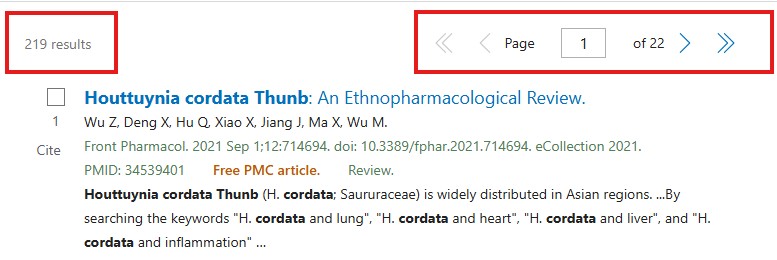
Houttuynia cordata has been the subject of scientific research across a variety of areas. If you'd like to explore the published literature for yourself, PubMed provides a searchable database of biomedical research and publications.
Explore Houttuynia cordata Research on PubMed
What You'll Find
A search of the published literature can lead you to research covering topics such as the plant's naturally occurring compounds, extraction and preparation methods, biological activity, fermentation-related research, and other areas of scientific investigation.
Want to see the literature yourself? Here's PubMed.
A Note From Brett ...
I'll admit it—I didn't know the first thing about Houttuynia cordata when I was introduced to this. The more I learned, however, the more intrigued I became. The combination of traditional knowledge, modern research, and proprietary fermentation had my attention. Sometimes the most interesting discoveries are the ones hiding in plain sight.
Note: This isn't a copycat product. It is a deeply researched, masterfully crafted innovation that represents the absolute future of wellness—and I couldn't be prouder to share it with you.
Continue Exploring PluriActiv
(These links will go live as we continue building out the site, Check back often!)
Interested in Learning More?
PluriActiv is currently available through Illumera's wellness product line.
If you'd like to learn more about the PluriActiv product, or if you're ready to become a customer, click below.
About The Author
Brett Gurney is an entrepreneur, online marketer, and lifelong student of emerging trends in wellness, technology, and business. He likes taking complex ideas and breaking them down into practical, easy-to-understand information that helps readers stay informed and make confident decisions for themselves.
Brett is a big fan of the PluriActiv product and the technology behind it. So he shares what he learns and helps others discover trends they may not have encountered otherwise.
Subscribe to our PluriActiv Newsletter to be notified of future product launches and updates.

Copyright2026 Illumera Life - Privacy Policy